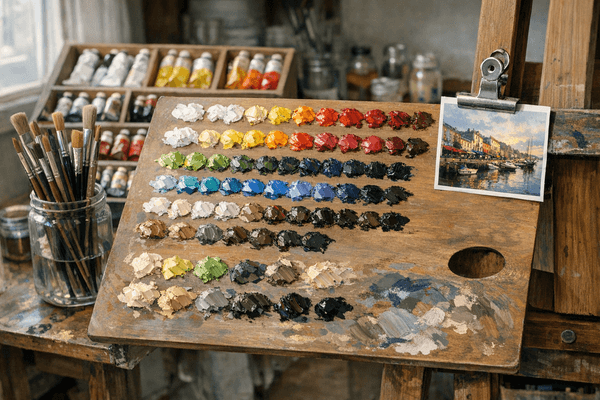
Convert Any Photo into an Oil Paint Color Palette

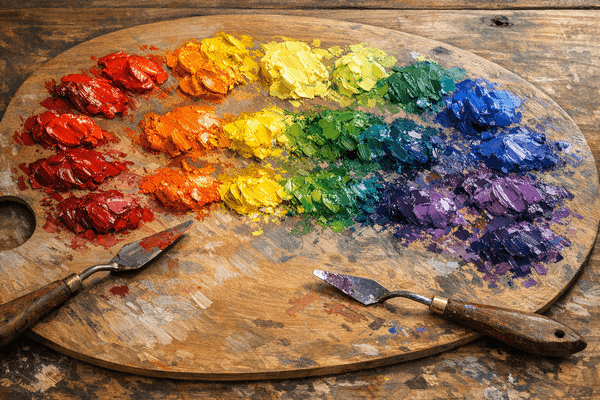
Oil painting color palette extracted from still life reference photo with pottery and fruit

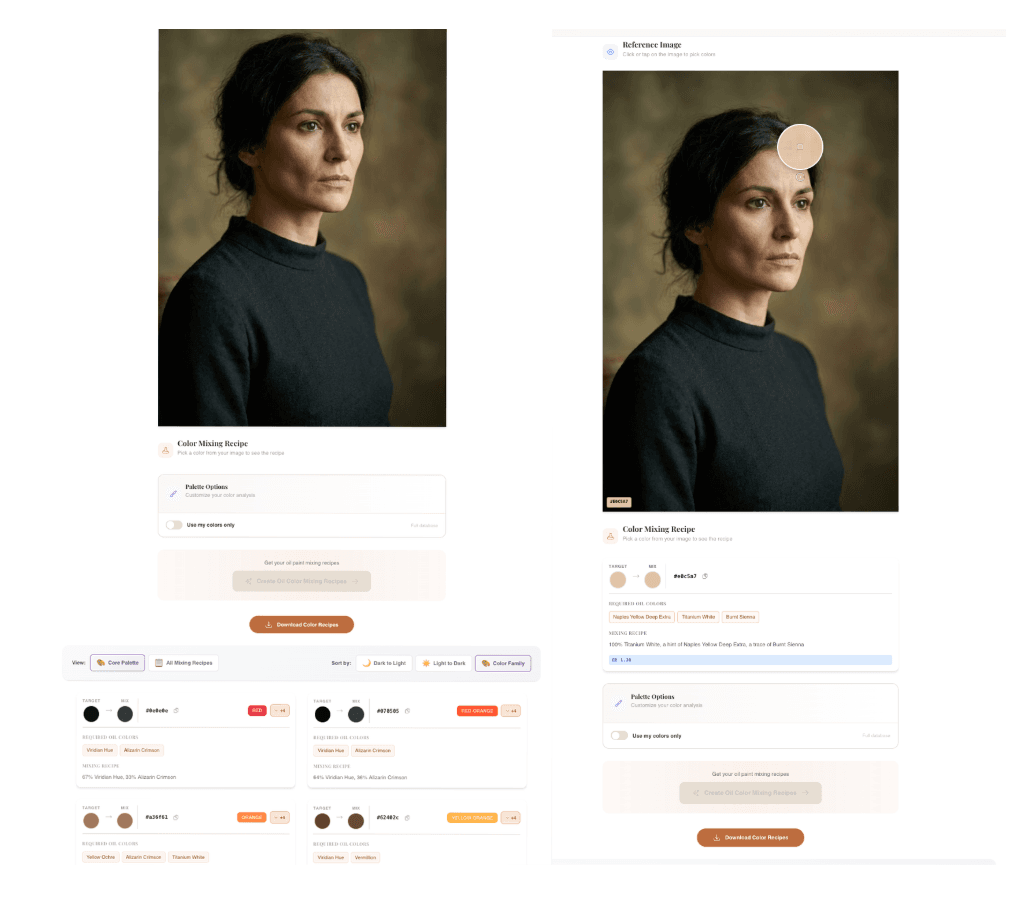
Upload a photo and get oil paint mixing recipes. The tool extracts colors and provides pigment-based formulas you can use at your easel.

Get Oil Paint Mixing Recipes from Your Photos

With Color2OilPaint, you can extract oil paint mixing recipes from any reference photo. The tool identifies dominant colors and provides pigment-based formulas you can use at your easel.

Artist struggling with color matching between reference photo and oil paints
THE CHALLENGE

Matching Photo Colors to Physical Paint

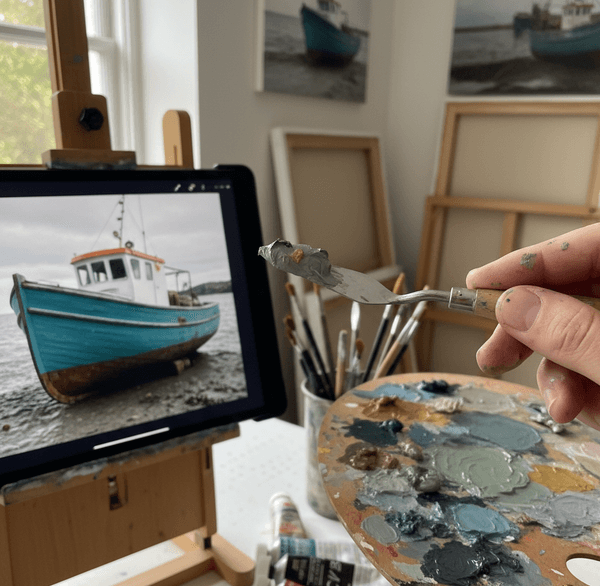
Screens display colors using light (RGB), while paint mixes colors through pigment absorption. This fundamental difference makes matching tricky:

Trial and error

adjusting mixes until they look right

Session-to-session drift

colors shift when you remix from memory

Gamut limitations

some screen colors can't be mixed with paint

The tool provides specific pigment names and ratios, giving you a concrete starting point instead of guessing.

Beginner artist learning hands-on color mixing with oil paints
FOR BEGINNERS

Learn Color Mixing by Doing

Color theory books explain concepts, but mixing paint is a hands-on skill. Common beginner struggles:

Understanding which pigments mix cleanly

versus which create mud

Knowing how much of each color to use

ratios aren't intuitive at first

Connecting theory to actual tubes of paint

pigment names vs. marketing names

The mixing recipes show which pigments combine to create specific colors. Following these formulas helps you learn color relationships through practice rather than theory alone.

How It Works

Step 1

Select Your Image

Choose a reference photo from your device that you want to paint.

Step 2

Generate Palette

Our tool analyzes the photo and creates a custom oil paint palette.

Step 3

View Color Recipes

See the oil paint color mixtures needed for each shade in your palette.

Step 4

Start Painting

Use the provided color recipes as a guide to recreate your reference photo.

Key Features

Color Palette Extraction

Extract the main colors from your photo with precision.

Image to Oil Color Palette

Get real oil paint pigment matches from your photo.

Oil Paint Mixing Recipe

Receive easy, step-by-step color mixing instructions.

Color Picker Tool

Select any single color from your image for detailed paint mixing analysis.

Downloadable Results

Save and download your color palettes and mixing recipes as PDF or image.

Well-organized artist workstation with prepared palette and color mixing setup
WORKFLOW

Prepare Your Palette Before You Paint

Color preparation takes time. Having your mixing formulas ready upfront helps you:

Plan your palette in advance

know which tubes you need before starting

Document your mixes

recreate colors across multiple sessions

Reduce interruptions

less trial-and-error while painting

Get all your mixing formulas before you start. Prepare colors in advance, document ratios, and keep notes for multi-session paintings.

Get Your Color Recipe

Select your reference image and get oil paint mixing recipes with exact pigment names and ratios.

Select Your Image

Your Painting Journey: From Beginner to Confident Artist

First 3 Months

Stage 1: Understanding the Basics
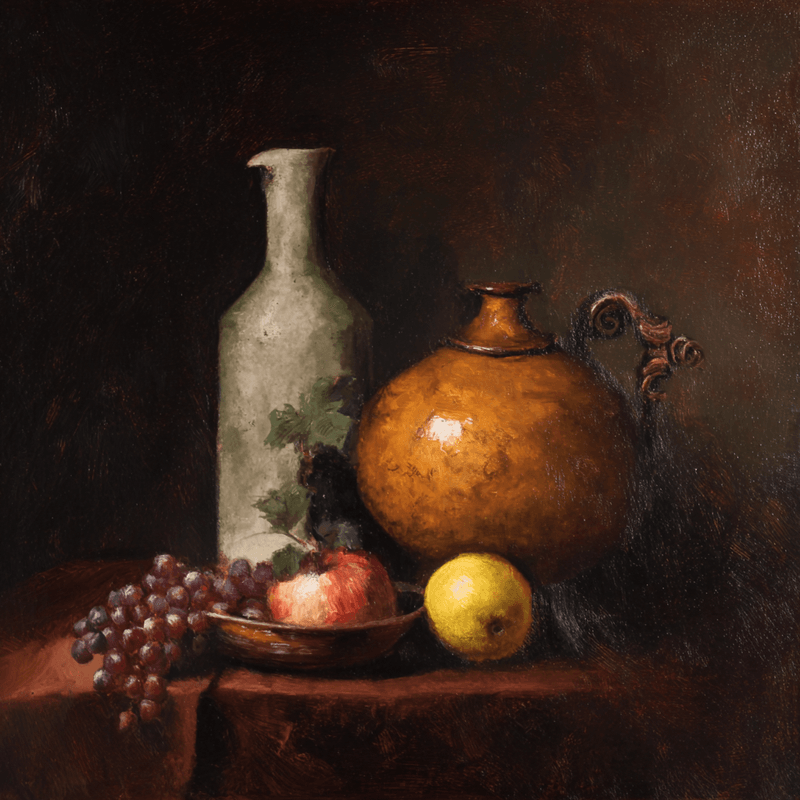
Master the fundamentals through still life studies

Master the fundamentals through still life studies

Your first three months focus on fundamentals: how paint behaves, basic color relationships, and simple techniques. Expect frustration as your hands learn new motor skills and your eyes learn to see color relationships. This is normal and necessary. During this stage, focus on small studies rather than ambitious finished paintings. Practice mixing clean secondary colors, achieving consistent paint consistency, and controlling your brush.
Common milestones: Successfully mixing a specific color on your first try, completing your first painting that doesn't look muddy, understanding why a color doesn't match your reference (too warm, too light, wrong saturation). These small victories build the confidence needed for the next stage. Our introduction to oil painting basics provides structured exercises for this foundational period.

Key Milestones

  • Mix specific colors accurately
  • Complete first non-muddy painting
  • Understand color temperature
Months 3-6

Stage 2: Controlled Exercises
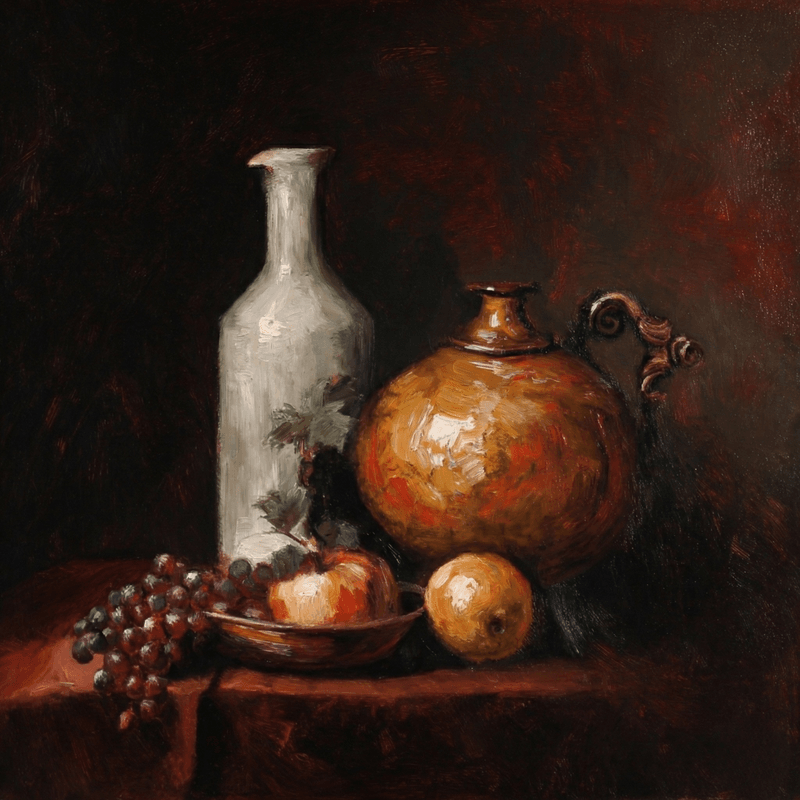
Practicing controlled exercises with limited palettes

Practicing controlled exercises with limited palettes

After basics feel comfortable, move to deliberate practice with constraints. Paint the same subject (like an apple) multiple times using different limited palettes. Try the Zorn palette (yellow ochre, vermillion, ivory black, white) for portraits. Attempt alla prima (wet-on-wet) techniques for small landscapes. These controlled exercises teach you what different approaches can achieve.
This stage develops your problem-solving abilities. When colors don't work, you'll start diagnosing why: "This green is too warm" or "I need more value contrast, not different hues." You're building an internal database of cause-and-effect relationships. Expect to produce some unsuccessful paintings—these teach you more than successes. The key insight from common painting mistakes is that every error is data for improvement.

Key Milestones

  • Diagnose color problems
  • Use limited palettes effectively
  • Learn from unsuccessful paintings
Months 6-12

Stage 3: Building Confidence
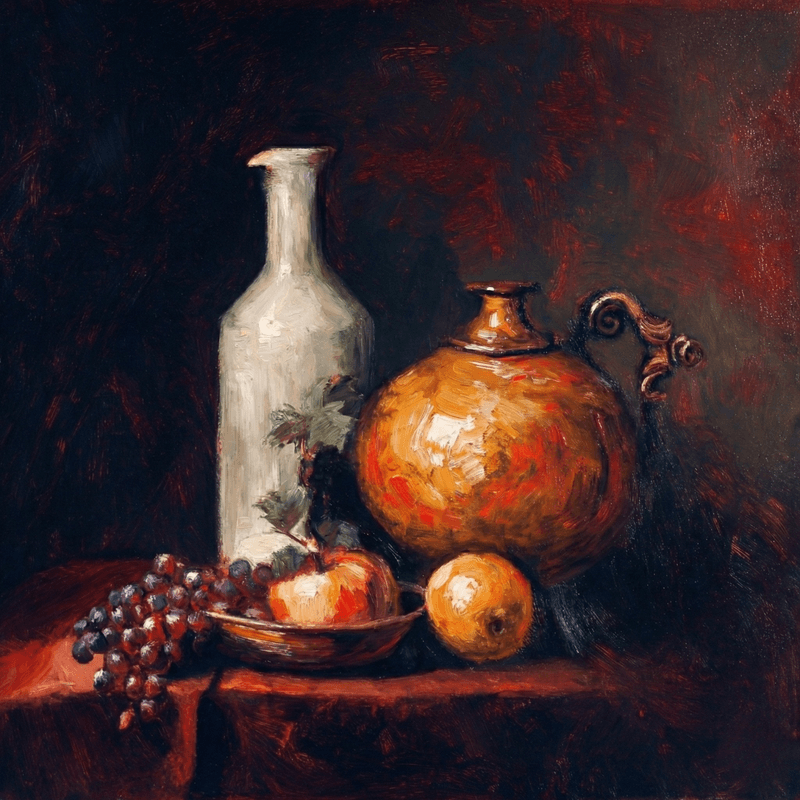
Building confidence through creative color choices

Building confidence through creative color choices

Around six months, technical struggles decrease and creative challenges increase. Your hands can execute what your mind envisions, but now you're wrestling with composition, storytelling, and personal expression. Color mastery becomes about supporting your artistic intent rather than just matching what you see.
You'll start making deliberate choices to adjust colors for emotional effect: cooling shadows for a melancholy mood, warming highlights for golden hour nostalgia, exaggerating saturation for vibrancy. This is where you transition from technician to artist. The confidence to depart from strict realism comes from thoroughly understanding the reality you're departing from.
Year 2 and Beyond

Stage 4: Developing Personal Style
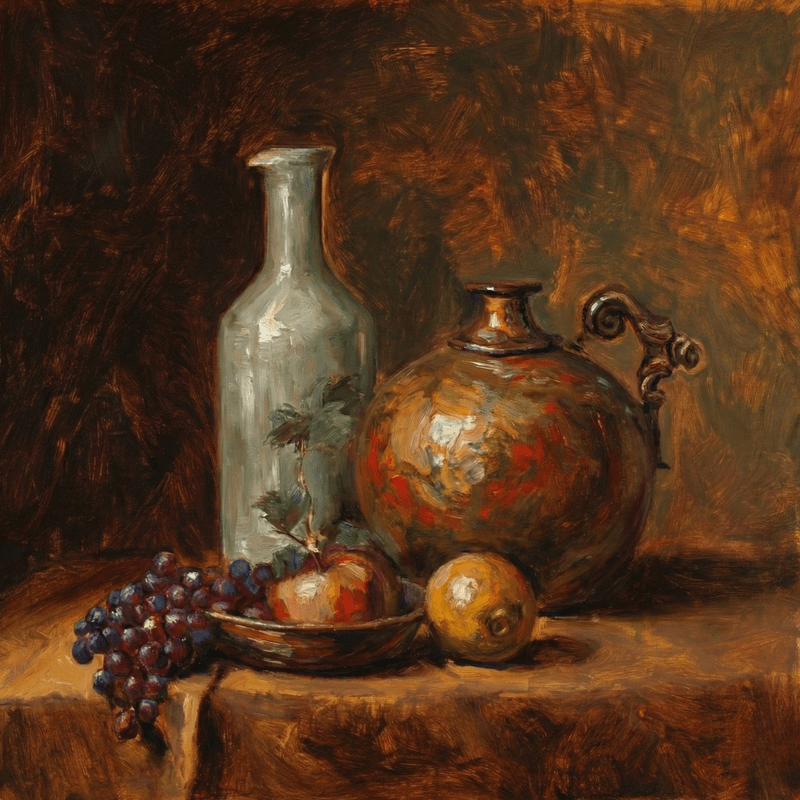
Developing unique artistic style and color signature

Developing unique artistic style and color signature

After a year of consistent practice, recognizable patterns emerge in your work. Perhaps you gravitate toward muted earth tones or favor high-key, light-filled scenes. Maybe you use distinctive mark-making or characteristic color combinations. This personal style develops naturally from your accumulated decisions and preferences—it cannot be forced earlier.
At this stage, color becomes one tool among many for expressing your unique artistic vision. You might develop signature approaches: always using a colored ground, favoring optical mixing over pre-mixed colors, or building paintings through successive glazes. Our advanced landscape techniques tutorial explores how experienced painters use color sophistication to create impact.

Stage 5: Realistic Expectations and Practice Routines
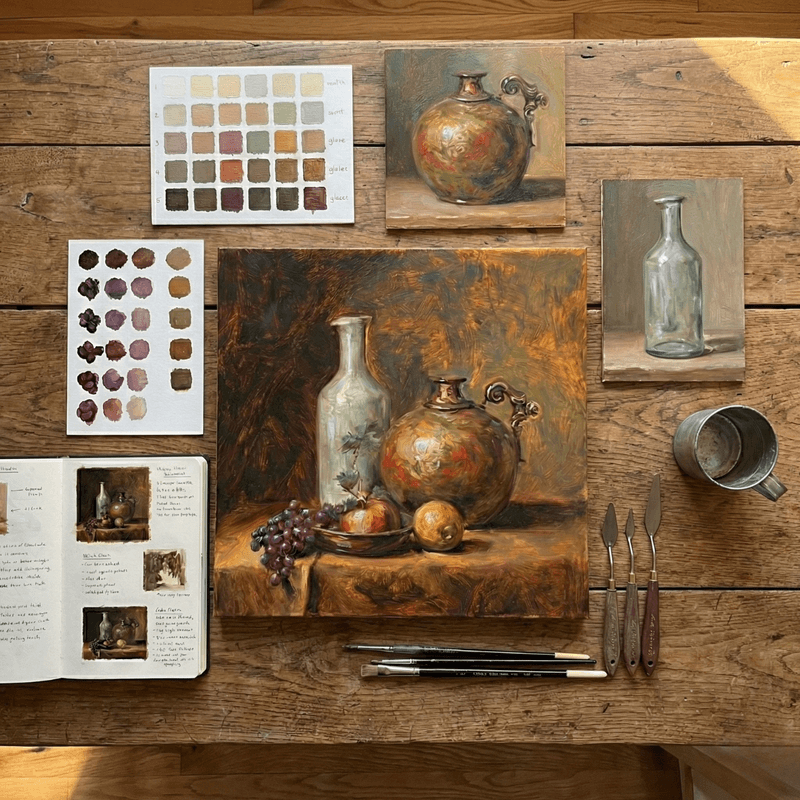
Effective practice routines for color mastery

Effective practice routines for color mastery

Progress isn't linear. Expect plateaus where you seem stuck, followed by breakthroughs where everything suddenly clicks. Most painters need 100-200 hours of practice (about a year of painting 3 hours per week) to feel genuinely confident with color mixing. This timeline assumes deliberate practice, not just recreational painting.
Effective practice: Paint small color studies before large paintings. Copy master works to understand their color strategies. Paint the same subject repeatedly to isolate specific skill development. Mix color charts to build your mental library. Keep a painting journal documenting what worked and what didn't. These habits, detailed in our educational content, accelerate your journey from beginner to confident artist.
The Artist's Studio: Essential Knowledge for Oil Painters

Stage 1: Lighting: The Foundation of Accurate Color Perception

Proper studio lighting for accurate color perception

Proper studio lighting for accurate color perception

Your studio lighting dramatically affects how you perceive and mix colors. Natural north-facing light (in the northern hemisphere) provides consistent, neutral illumination throughout the day without harsh direct sunlight. If north light isn't available, invest in 5000K-5500K "daylight" LED bulbs—this color temperature most closely matches natural daylight and allows you to see colors accurately.
Avoid warm incandescent bulbs (2700K-3000K) for painting, as they cast a yellow-orange tint that makes cool colors appear muted and warm colors oversaturated. Paint mixed under warm light will look completely different in natural daylight. Many painters keep two lighting setups: cool daylight bulbs for color mixing and warm bulbs to check how the painting will look in typical home lighting conditions.

Stage 2: Palette Organization for Workflow Efficiency

Organized oil paint palette for efficient workflow

Organized oil paint palette for efficient workflow

Organize your palette systematically to avoid muddy accidental mixes. One proven method: arrange colors in a temperature-ordered string around the edge (cool colors on one side transitioning to warm colors on the other), leaving the center free for mixing. Place white at the end of the cool side, as you'll use more white with cool colors for proper value.
Another approach: separate warm and cool versions of each primary into distinct zones. This prevents accidentally grabbing the wrong temperature and creating mud. Professional painters often stick to the same palette arrangement for years, developing muscle memory for where each color sits. Learn more about selecting and organizing your painting tools for maximum efficiency.

Stage 3: Paint Quality: When It Matters Most

Professional vs student grade oil paint comparison

Professional vs student grade oil paint comparison

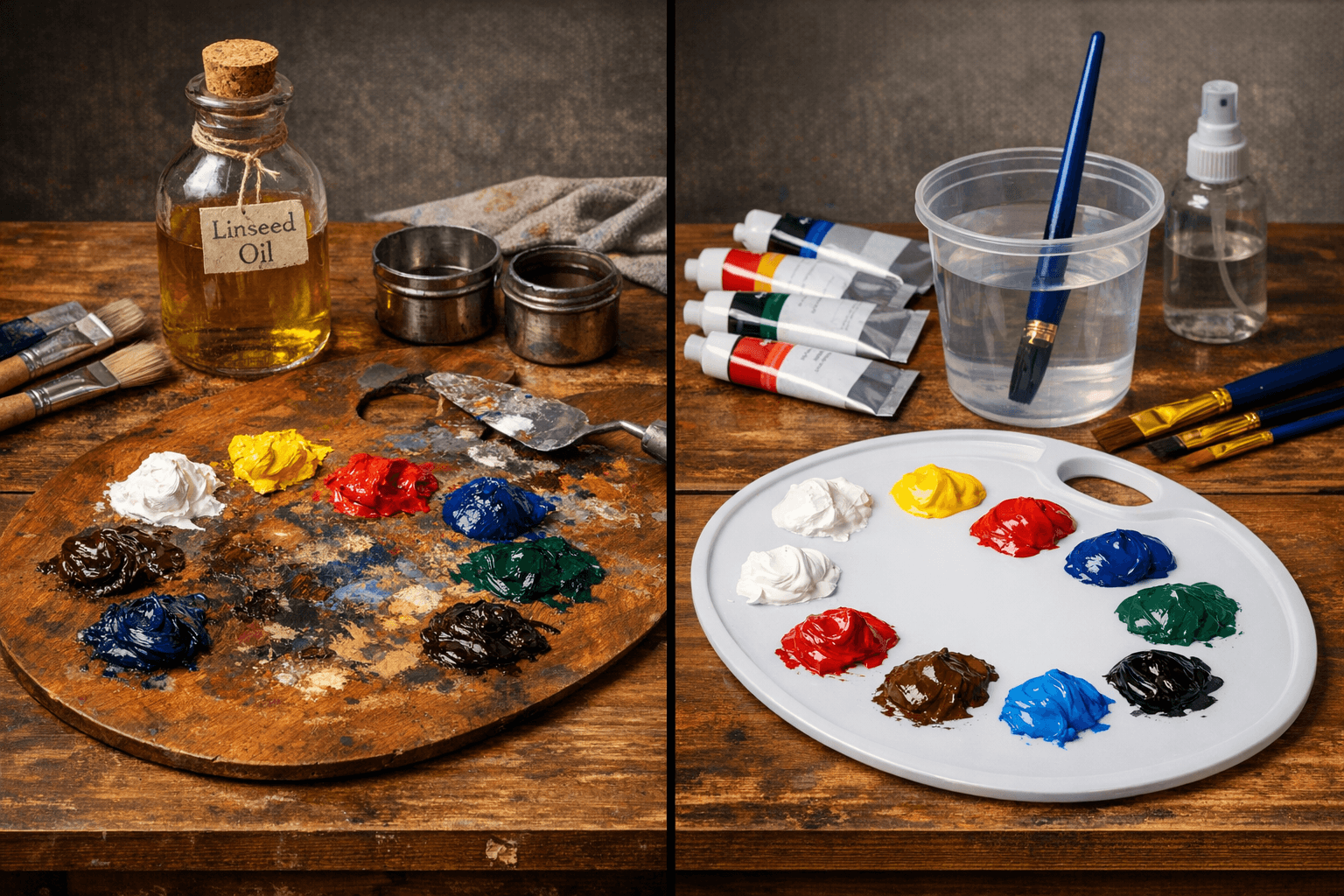
Student-grade paints contain less pigment and more filler (binder, extenders), requiring more paint to achieve the same color intensity as professional-grade. For most colors, student-grade works fine when learning. However, invest in professional-grade for key colors: titanium white (you'll use gallons), ultramarine blue, and the specific reds and yellows you use most. These workhorses benefit from higher pigment concentration.
Avoid student grade for transparent colors used in glazing (alizarin crimson, burnt sienna, ultramarine blue) as fillers make them cloudy instead of jewel-like. The price difference between student and professional grade is often 2-3x, but professional paints go further due to higher pigment load, nearly equalizing cost-per-painting.

Stage 4: Mediums and Their Effect on Color

Different oil painting mediums and their effects

Different oil painting mediums and their effects

Linseed oil—the traditional medium—yellows slightly over time, warming colors imperceptibly. Safflower oil stays clearer but dries slower, better for whites and light colors. Walnut oil offers a compromise: slow-drying like safflower but without yellowing like linseed. Your medium choice affects not just handling properties but long-term color appearance.
Avoid using too much medium, especially in early layers (violates "fat over lean"). Excess oil can cause yellowing, wrinkling, and slow drying. Many professionals use paint straight from the tube for initial layers, adding medium only for final glazes. Proper technique matters more than expensive mediums—covered thoroughly in our complete guide to mixing oil paints.

Stage 5: Canvas Preparation's Impact on Color

Prepared canvas with toned ground

Prepared canvas with toned ground

A bright white gesso ground makes colors appear more vibrant but can feel stark while painting. Toning your canvas with a neutral color (raw umber, transparent oxide red, or a warm gray) provides a midtone that helps judge values accurately. Colored grounds also create harmony—a warm ochre ground showing through creates color unity even if you don't consciously plan it.

Stage 6: Maintaining Consistency Across Sessions

Maintaining color consistency across painting sessions

Maintaining color consistency across painting sessions

For multi-session paintings, photograph your palette at the end of each session before cleaning up. This visual reference helps you remix colors accurately next time. Alternatively, use a covered palette (wet palette) that keeps paints workable for days, or mix large batches of key colors into sealed containers. Color consistency across sessions separates professional results from amateur-looking paintings with visible color shifts. Proper storage techniques for paints and works-in-progress maintain quality and save materials.

From Inspiration to Canvas: The Creative Process

Stage 1: Finding and Choosing Reference Photos

Selecting quality reference photos for painting

Selecting quality reference photos for painting

Not all reference photos work equally well for oil painting. Look for images with clear light direction, interesting value patterns (dark, light, and midtones), and subjects that excite you personally. Avoid heavily filtered Instagram photos or images with artificial lighting that creates confusing color casts. Natural outdoor light or simple window light photographs translate most successfully to paint.
Consider composition early: Does the image follow the rule of thirds? Is there a clear focal point? Does the value pattern read as simple shapes when you squint? A technically perfect photo with poor composition yields a disappointing painting. Many professional painters combine multiple reference photos or sketch preliminary compositions before committing to paint. Our guide to working from reference photos covers selection criteria in depth.

Stage 2: Planning Your Painting: Studies Before Commitment

Preliminary color studies and sketches

Preliminary color studies and sketches

Before starting a large painting, invest time in planning studies. A thumbnail sketch (2x3 inches) helps you test compositional ideas quickly. A value study in grayscale shows whether your darks, lights, and midtones create a strong pattern independent of color. A color study—a small, quick version focusing only on color relationships—prevents costly mistakes on your final canvas.
These studies take 15-30 minutes each but save hours of frustration. They answer questions: Should I cool down the shadows? Does this color scheme convey the mood I want? Is my focal point obvious? Professional painters often create multiple studies exploring different approaches before choosing the strongest direction for the final painting.

Stage 3: Color Matching vs. Artistic Interpretation

Balancing color accuracy with artistic interpretation

Balancing color accuracy with artistic interpretation

Digital tools can extract exact colors from reference photos—incredibly useful for beginners learning color relationships. However, mature artistic expression comes from knowing when to match and when to interpret. Exact matching serves realism and commissioned work where accuracy matters. Artistic interpretation—adjusting colors for emotional impact—serves creative personal work.
You might: cool all colors for a melancholy mood, warm everything for nostalgia, exaggerate saturation for vibrancy, or mute colors for subtlety. These decisions should be intentional, not accidental. First learn to match colors accurately; then earn the right to break rules deliberately. Our reference photo guide and interpretive tutorials show both ends of this spectrum.

Stage 4: Developing Your Personal Color Voice

Developing personal color voice and style

Developing personal color voice and style

Your color signature emerges from repeated decisions over hundreds of paintings. Do you gravitate toward earth tones or saturated brights? High-key lightness or dramatic chiaroscuro? Warm palettes or cool? Notice your preferences and consciously develop them. Study artists whose color sense you admire—how do they achieve their characteristic look?
Personal style isn't invented; it's discovered through honest work. Paint subjects that genuinely interest you using approaches that feel natural. Your authentic voice emerges from this practice, not from trying to imitate trending styles. Many successful painters limit their palette intentionally—six colors plus white—and explore infinite variations within that constraint. This focused exploration deepens expertise rather than scattered experimenting. Resources like our plein air color techniques show how limitations breed creativity.

Stage 5: Balancing Technical Accuracy with Creative Expression

Balancing technical accuracy with creative expression

Balancing technical accuracy with creative expression

The tension between faithful representation and artistic interpretation defines much of oil painting's challenge and appeal. Technical accuracy provides the foundation—you must understand reality before you can meaningfully depart from it. But slavish copying produces lifeless work. The sweet spot: solid technical skills deployed in service of personal artistic vision.
Early in your journey, lean toward accuracy to build skills. As competence develops, gradually introduce interpretation. Eventually, you'll intuitively know which elements to render accurately (often the focal point) and where to take creative license (often backgrounds and periphery). This balance separates illustration from fine art, photography from painting. Your creative process becomes a conversation between what you see and what you feel about what you see.

The Evolution of Color Theory in Art

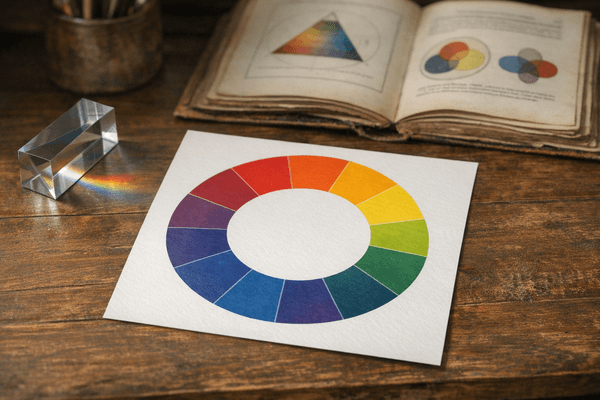
Understanding color theory transforms you from someone who mixes paint by trial and error into an artist who makes intentional, confident color choices. The foundation of modern color theory began with Sir Isaac Newton's discovery that white light contains all colors of the spectrum. Later, Johann Wolfgang von Goethe expanded this to explore how humans actually perceive and respond to color emotionally—crucial knowledge for painters.
In the 20th century, Johannes Itten developed the color wheel specifically for artists, organizing colors by their relationships: complementary pairs that create vibrant contrast, analogous groups that harmonize naturally, and triadic combinations that balance variety with unity. These aren't abstract concepts—they're practical tools that inform every color decision you make on your palette.
Evolution of color theory from Newton's prism to the artist's color wheel

Why Oil Painting Color Theory Differs from Digital

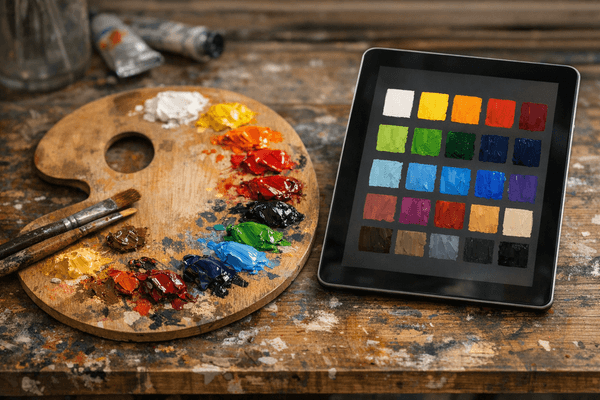
Your computer screen creates color by adding light (RGB: red, green, blue), which means combining all colors creates white. Oil paints work oppositely—they subtract light through pigment absorption, so combining colors moves toward darkness and neutrality. This fundamental difference explains why a vibrant blue-green you see on your screen might be impossible to mix with physical paints.
The color gamut—the range of colors a medium can produce—is wider for digital RGB than for physical pigments. Some digital colors simply don't exist in the paint world. Understanding this limitation helps you set realistic expectations and work creatively within the constraints of your medium. Rather than frustration, this becomes an opportunity to explore the unique beauty of what oil paints can do that screens cannot: texture, luminosity through glazing, and colors that change with viewing angle and lighting.
Contrast between digital RGB light mixing and physical oil paint subtractive mixing

Primary, Secondary, and Tertiary Colors in Practice

Traditional color theory teaches that red, yellow, and blue are primary colors that cannot be mixed from others. In practice with modern oil paints, this is an oversimplification. Professional painters often use split primaries—a warm and cool version of each primary color. For example, Cadmium Red (warm, orange-leaning) and Alizarin Crimson (cool, purple-leaning) as your two reds.
This split-primary approach gives you clean, vibrant secondary colors. Mixing Cadmium Red with Cadmium Yellow creates brilliant orange. But mixing Alizarin Crimson with Cadmium Yellow produces muddy, neutralized tones because you're combining warm and cool pigments. Understanding these relationships—explored in depth in our color theory tutorial—prevents the most common mixing mistakes.
Tertiary colors (yellow-orange, red-orange, red-purple, blue-purple, blue-green, yellow-green) come from mixing primaries with secondaries. These earth tones and muted hues make up the majority of colors in realistic painting. Learning to mix these deliberately, rather than accidentally creating mud, separates beginners from advancing painters.
Split primary color system showing warm and cool versions of red, yellow, and blue

How Theory Improves Your Artistic Choices

Color theory isn't about following rules—it's about understanding principles so you can make informed creative decisions. When you know that complementary colors create the strongest value contrast, you can design paintings with clear focal points. When you understand color temperature's emotional impact, you can set the mood of your work intentionally. Our guide to the science of color mixing explores how this knowledge translates to practical painting decisions.
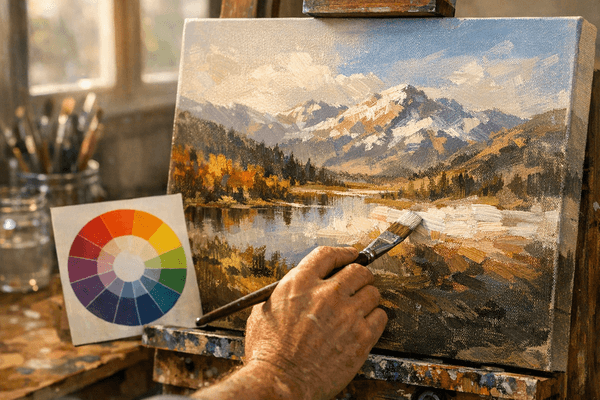
Artist confidently painting with intentional complementary color choices

How It Works

Upload your reference photo, and the tool identifies the dominant colors. Each color is matched to real oil paint pigments and you get mixing formulas with pigment names and proportions.

Color Extraction

The tool analyzes your photo and identifies the key colors that make up your image.

Pigment Matching

Each extracted color is matched to real oil paint pigments from major manufacturers.

Mixing Formulas

You get pigment names, proportions, and pigment codes so you can use any brand you prefer.

What Artists Are Saying

Feedback from painters using the tool

Mark B.

Professional Landscape Artist

"Color2OilPaint has completely transformed my workflow. I used to spend hours mixing and testing colors before starting a painting. Now I can extract the perfect palette from my reference photos in seconds and focus on creating art."

Birgit B.

Oil Painter

"I used to spend hours mixing and testing colors before starting a painting. Now I can extract the perfect palette from my reference photos in seconds and focus on creating art."

Peter C.

Hobby Painter

"As a beginner, color mixing was intimidating. This tool gives me the confidence to tackle complex subjects knowing I have the exact colors I need. My paintings have improved dramatically in just a few months."

Frequently Asked Questions

Learn from the Experts

Tutorials and guides for oil painters